
Why Do I Keep Ending Up in the Same Arguments? Understanding the Drama Triangle
Have you ever come away from a conversation with a family member, a partner or a close friend and thought, how did we end up here again? The words might change, but the feeling is familiar. Someone might end up angry and blaming, perhaps feel blamed, or trying to fix it all.
If this sounds like you, you're not alone. In transactional analysis, the approach I work with, there's a simple idea that many people find helps them make sense of these repeating patterns. It's called the drama triangle.
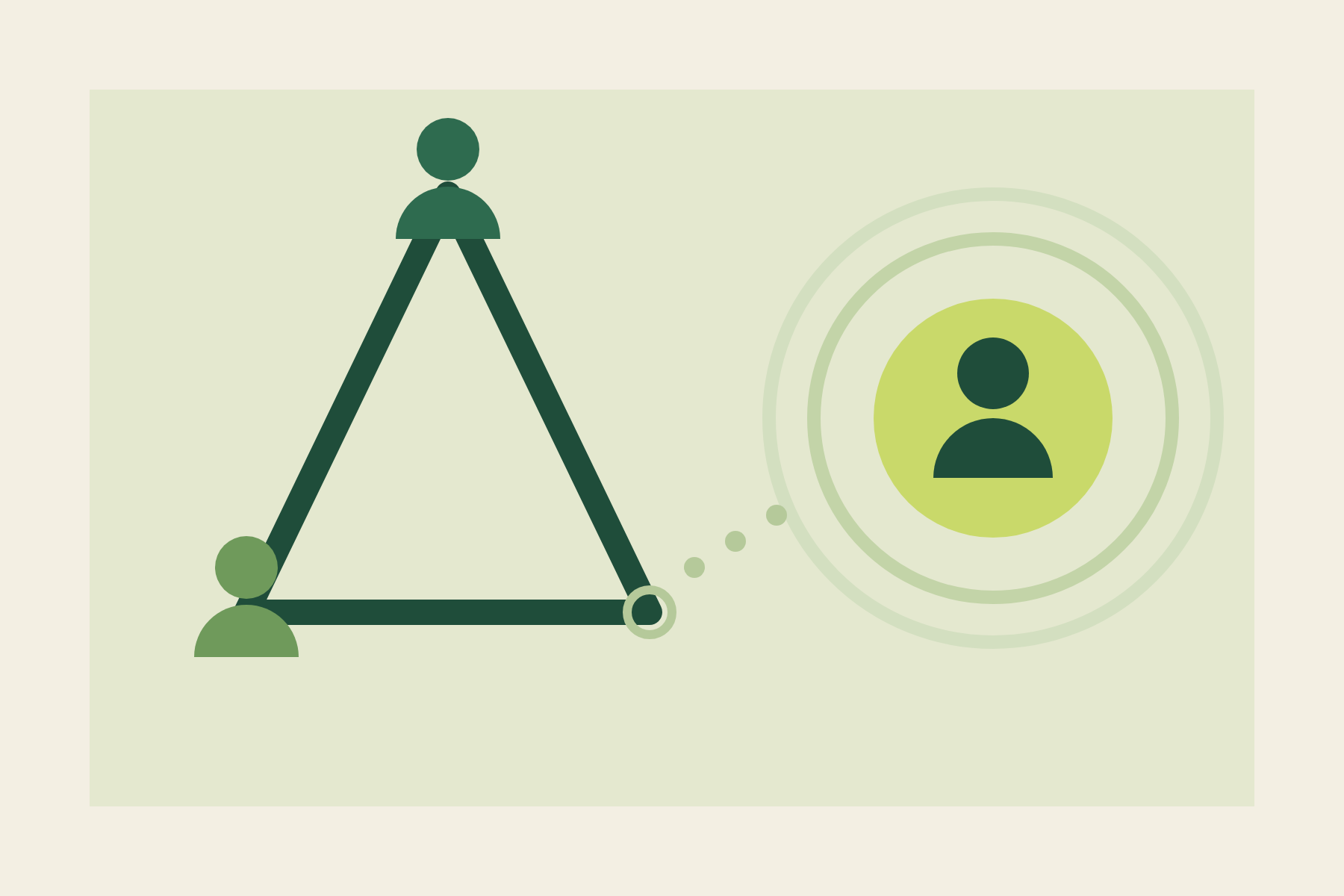
Three familiar roles
The drama triangle was described by psychiatrist Stephen Karpman in 1968. He noticed that when relationships get stuck, people tend to move between three roles:
The Rescuer steps in to help, often before being asked. "Let me sort it out." "Don't worry, I'll handle it." It can look kind, but it can also leave us exhausted and quietly resentful, and leave the other person feeling less capable.
The Victim feels helpless and stuck. "Why does this always happen to me?" "There's nothing I can do." This isn't about being a real victim of harm. It's a feeling of having no power or choice in the moment.
The Persecutor criticises or blames. "This is all your fault." "You never get it right." Sometimes it's loud, and sometimes it's a cold silence or a sharp comment.
Most of us have a role we slip into most easily. Many of the women I work with recognise themselves as natural Rescuers. They are the ones who hold everything together, keep the peace and look after everyone else's feelings.
Why we go round and round
What makes the triangle so powerful is that the roles keep shifting. The Rescuer who gives and gives can suddenly snap and become the Persecutor. Or she can feel unappreciated and land in the Victim corner: "After everything I've done for you…"
Once we're on the triangle, it's very hard to step off, because each role invites the others. And everyone can come away feeling misunderstood.
These patterns usually start long before adult life. If you grew up with a parent whose moods you had to manage, rescuing may have been how you stayed safe and close. If you were often criticised or blamed, you might have learned to feel small and powerless, or to protect yourself by getting in first. Our brains are built for survival, and these roles made sense at the time. They kept you safe, and in relationship.
How it can show up in difficult relationships
The triangle can be especially strong in relationships where there was control or criticism. You might notice yourself:
apologising for things that weren't your fault
working hard to keep someone happy so things don't blow up
feeling like the "bad one" when you finally say how you feel
swinging between guilt and anger after contact with a parent or ex-partner
If the relationship was abusive, it's important to say this clearly: the triangle is not a way of sharing out blame. Understanding your part in a pattern is never the same as being responsible for someone else's behaviour.
Stepping off the triangle
The hopeful part is that you can step off. In 1990, Acey Choy, another transactional analyst, described a different way of relating, often called the Winner's Triangle. Each role has a healthier alternative:
From Rescuer to Caring. You offer support without taking over, and trust the other person to find their own way. You also start caring for yourself.
From Victim to Vulnerable. You notice your feelings and needs, and ask for help clearly, while remembering you have choices.
From Persecutor to Assertive. You say what you want and set boundaries, without attacking or punishing.
These shifts can sound simple on paper, but they can feel very uncomfortable in real life, especially if the old roles helped you survive. Saying no without guilt, or asking for what you need, can take time and practice.
How therapy can help
In therapy, we can gently explore which roles feel most familiar to you, where they came from, and what they've cost you. Sometimes the triangle even shows up in the therapy room, and noticing it together can be a powerful way to try something new in a safe relationship.
The aim isn't to judge the patterns that once protected you. It's to understand them with curiosity, and to discover that there may be another way.
If this resonates and you'd like to explore it, I offer a free 15-minute call. You can reach me on 07930 600901 or at hello@katepagetherapy.co.uk.
Kate Page, Integrative Counsellor MBACP, St Agnes, Cornwall and online